Build-Operate-Transfer: A Strategic Gateway to Scalable Growth in the GCC
Expanding into new markets has always been a balancing act between ambition and risk. For companies eyeing the Gulf Cooperation Council (GCC), that balance is even more nuanced. The region offers immense opportunity—rapid digital transformation, government-backed innovation agendas, and a young, tech-savvy workforce—but it also demands a deep understanding of local regulations, cultural expectations, and operational realities.This is where the Build-Operate-Transfer (BOT) model steps in as a powerful, pragmatic strategy.Instead of making heavy upfront investments or navigating unfamiliar territory alone, global organizations are increasingly choosing BOT as a structured pathway into the GCC. With the right partner, businesses can build operations efficiently, run them at scale, and eventually take full ownership—confident, compliant, and future-ready.As a recognized thought leader in this space, InductusGCC has emerged as a strategic partner helping enterprises unlock the full potential of BOT models across the GCC region.
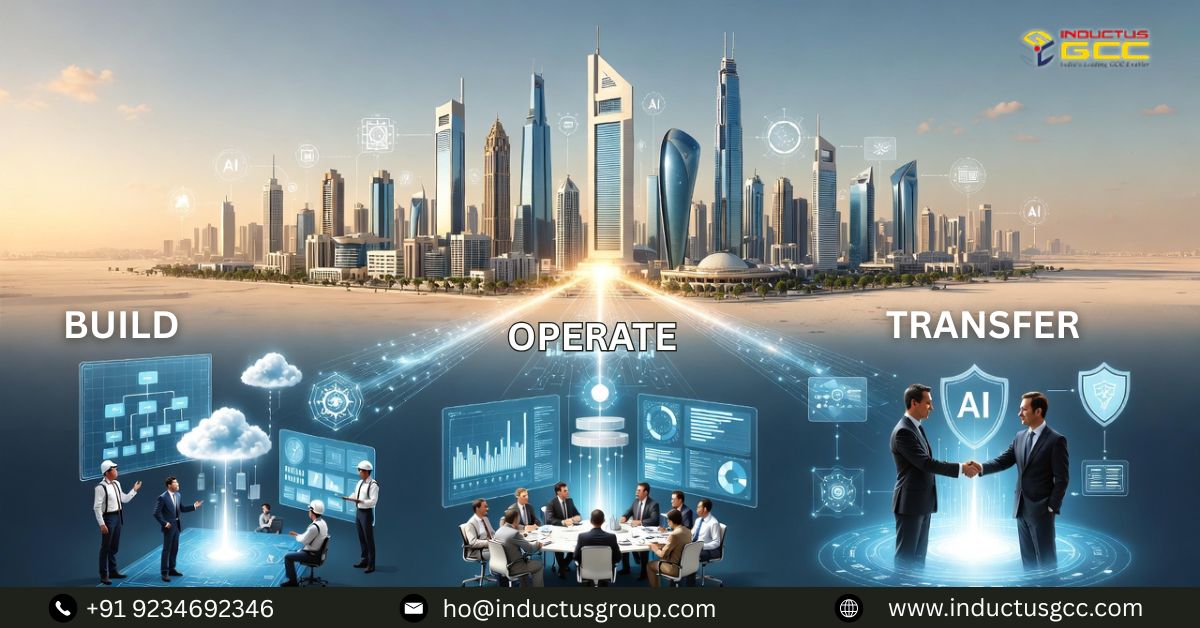
What Is the Build-Operate-Transfer (BOT) Model?
At its core, the Build-Operate-Transfer model is a phased market entry and operations strategy designed to reduce risk while accelerating growth.Rather than jumping directly into setting up a fully owned operation, companies work with a specialized partner who:
- Builds the operation
- Operates it to maturity
- Transfers ownership back to the client
Let’s break this down in practical business terms.
The Build Phase
During the build phase, the BOT partner establishes the foundation of the operation. This includes:
- Legal entity setup (where applicable)
- Infrastructure and technology implementation
- Hiring and onboarding local talent
- Establishing governance, security, and compliance frameworks
For example, a European fintech firm entering the UAE may rely on a BOT partner to set up a compliant technology delivery center aligned with local labor and data regulations.
The Operate Phase
Once the foundation is in place, the partner runs the operation on behalf of the client. This phase focuses on:
- Delivering measurable business outcomes
- Optimizing processes and performance
- Embedding organizational culture and best practices
- Training local teams for long-term success
This is where the operation stabilizes, scales, and begins delivering consistent value.
The Transfer Phase
Finally, ownership and control are smoothly transferred to the client. By this stage:
- Teams are fully trained
- Processes are documented and optimized
- Governance models are proven
The client takes over a mature, self-sustaining operation—without the typical growing pains of a greenfield setup.
Why Businesses Are Choosing BOT for GCC Expansion
The GCC is not just another growth market. It’s a region with distinct economic, regulatory, and cultural characteristics that make traditional expansion models risky and expensive.The Build-Operate-Transfer approach aligns perfectly with these realities.
GCC-Specific Advantages That Make BOT Attractive
- Regulatory complexity: Each GCC country has unique labor laws, nationalization requirements, and licensing frameworks.
- Talent localization mandates: Programs like Emiratization and Saudization require thoughtful workforce planning.
- Speed-to-market pressure: Governments and enterprises move fast, leaving little room for trial-and-error expansion.
- High cost of missteps: Real estate, compliance errors, and operational inefficiencies can be costly.
BOT allows organizations to enter the market with a local expert already at the helm—significantly reducing risk.As an InductusGCC Enabler, the organization helps enterprises navigate these complexities while maintaining strategic control and long-term ownership goals.
Key Benefits of a Build-Operate-Transfer Strategy
A well-executed BOT model delivers far more than operational convenience. It creates strategic advantage.
Cost Efficiency Without Compromise
BOT minimizes upfront capital expenditure by spreading investment across phases. Companies avoid:
- Trial hiring mistakes
- Redundant infrastructure costs
- Expensive compliance errors
Instead, resources are allocated where they deliver immediate value.
Built-In Local Compliance
From labor regulations to data security and taxation, compliance is baked into the model from day one. This is especially critical in regulated GCC sectors like finance, healthcare, and energy.
Quality Control and Scalable Operations
Unlike outsourcing, BOT ensures dedicated teams, tailored processes, and full transparency. As demand grows, scaling becomes structured—not chaotic.
Risk Mitigation at Every Stage
Operational, financial, and legal risks are managed by an experienced partner during the most vulnerable phases of market entry.
Knowledge Transfer and Long-Term Autonomy
By the time the transfer phase arrives, your organization owns not just the operation—but the institutional knowledge that powers it.
How InductusGCC Supports BOT Success
Not all BOT partnerships are created equal. Success depends heavily on the partner’s ability to blend regional insight with operational rigor.InductusGCC plays a critical role across the entire BOT lifecycle.
What Sets InductusGCC Apart
- Deep GCC market expertise across the UAE, Saudi Arabia, and wider Gulf
- Proven operational frameworks tailored for offshore IT and business operations
- Strong governance and compliance models aligned with regional mandates
- Scalable talent ecosystems combining local and global expertise
As a true InductusGCC Enabler, the organization doesn’t just execute—it co-creates long-term value with its clients.By aligning business goals with local execution realities, InductusGCC ensures that BOT engagements are not transitional stopgaps, but strategic growth engines.
Real-World Scenarios and Use Cases
Scenario 1: Global SaaS Provider Expanding into Saudi Arabia
A mid-sized SaaS company wanted to support enterprise clients in KSA but lacked regional experience.
- Build: InductusGCC established a delivery center, hired local engineers, and ensured regulatory alignment.
- Operate: The center handled regional product customization and customer support.
- Transfer: Within three years, ownership was transferred to the client with a fully autonomous Saudi team.
Result: Faster market entry, lower risk, and strong local credibility.
Scenario 2: Financial Services Firm Scaling GCC Operations
A financial services organization needed a secure, compliant technology hub.Through BOT, they achieved:
- Immediate operational readiness
- Built-in compliance with financial regulations
- A seamless transition to internal ownership
Best Practices for a Successful BOT Engagement
If you’re considering a Build-Operate-Transfer model, these best practices can make the difference between success and frustration.
Define Clear KPIs Early
Align on success metrics from day one—cost efficiency, delivery timelines, quality benchmarks, and transition readiness.
Choose the Right Partner
Look beyond cost. Evaluate regional experience, governance maturity, and cultural alignment.
Plan the Transfer From the Start
A successful transfer is intentional, not rushed. Create a staged handover roadmap early in the engagement.
Invest in Local Talent Development
BOT works best when local teams are empowered, trained, and motivated to lead post-transfer.
Common Misconceptions About Build-Operate-Transfer
“BOT Is Only for Large Enterprises”
In reality, BOT is increasingly popular among mid-sized and fast-growing companies that want structured expansion without massive risk.
“It’s Too Slow or Bureaucratic”
When executed correctly, BOT accelerates time-to-market by eliminating trial-and-error setups.
“You Lose Control”
On the contrary, BOT provides more control than traditional outsourcing, with full transparency and eventual ownership.
Future Trends and the Role of BOT in GCC Growth
As the GCC accelerates its vision for digital economies, BOT models are evolving alongside it.Key trends shaping the future include:
- AI-driven operations and analytics
- Cloud-first infrastructure models
- Cybersecurity-focused delivery centers
- Industry-specific digital platforms
When regional innovation meets strategic execution, gccInducutus becomes a model for collaborative growth—where global ambition aligns seamlessly with local excellence.BOT is no longer just an entry strategy; it’s becoming a cornerstone of sustainable growth in the GCC.
Conclusion: Why Build-Operate-Transfer Is a Strategic Pathway Forward
The GCC represents one of the most exciting growth regions in the world—but success requires more than ambition.The Build-Operate-Transfer model offers a structured, low-risk, and scalable pathway to establish meaningful, long-term operations in the region. By combining speed, compliance, and knowledge transfer, BOT empowers organizations to grow with confidence.With InductusGCC as a strategic partner, businesses gain more than operational support—they gain a trusted guide through the complexities of GCC expansion.If you’re exploring offshore IT, operational scaling, or strategic market entry in the Gulf, now is the time to take a closer look.👉 Explore more insights or start your BOT journey at
https://inductusgcc.com/build-operate-transfer-strategic-bot-model-for-gcc/
